We get asked this question more than any other: what material should I use for my roof? After more than five decades of roofing work across London, the honest answer is that it depends entirely on the building, the location, and what you need the roof to do. There is no single best material. There is only the right material for your specific situation.
Let me walk through the main options and explain when each one makes sense.
Natural Slate
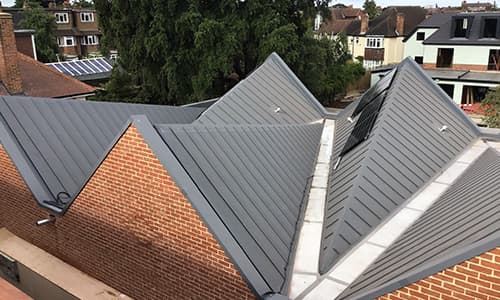
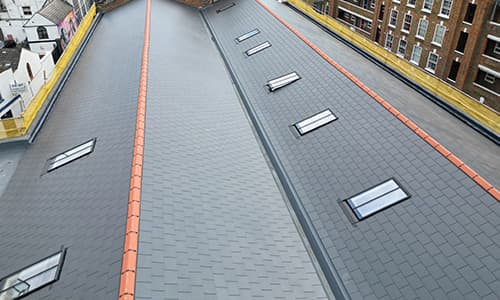
Natural slate is the premium choice for pitched roofing. A good Welsh slate roof will last 100 years or more. Spanish slate, which is more affordable, typically gives 60 to 80 years of service. We use both regularly, and the choice often comes down to budget and whether you are working on a heritage building where Welsh slate may be a planning requirement.
Slate looks beautiful on period properties. Victorian and Edwardian houses across Greenwich, Lewisham, and Bromley were originally built with it, and when we re-roof these properties, slate is almost always the right choice. The visual quality is impossible to replicate with synthetic alternatives, and conservation officers in most London boroughs will insist on natural slate for visible roof slopes in conservation areas.
The cost is higher than tile, typically 30 to 50 percent more for materials alone. But when you factor in the lifespan, the cost per year of service is actually competitive.
Clay and Concrete Tiles
Tiles are the workhorses of British roofing. Clay plain tiles and pantiles have been used for centuries and give a warm, traditional appearance. Modern clay tiles from manufacturers like Marley and Sandtoft are available in dozens of profiles and colours. A clay tile roof will last 80 to 100 years in normal conditions.
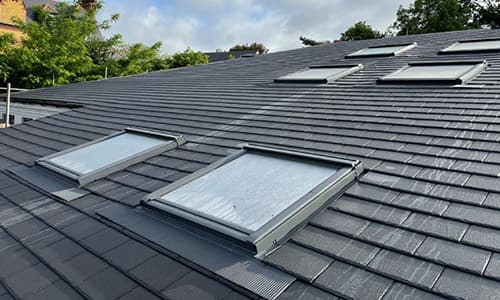
Concrete tiles are the most common choice for residential re-roofing projects where the budget is a primary consideration. Modern concrete interlocking tiles from Redland, Marley, and Russell provide good weather resistance and a reasonable appearance at a significantly lower cost than clay or slate. They typically last 40 to 60 years.
For most residential re-roofing projects in outer London boroughs, concrete tiles represent the best value. For high-specification properties or conservation areas, clay tiles offer the step up in quality and appearance.
Single Ply Membranes
For flat roofs on commercial buildings, extensions, and garages, single ply membranes (PVC, TPO, or EPDM) have become the standard specification. They are lightweight, quick to install, and come with manufacturer-backed guarantees of 20 to 30 years.
We install single ply systems from Sika Sarnafil, Bauder, and IKO Polymeric, among others. The choice between PVC and TPO depends on the application, the expected foot traffic, and the client preference. EPDM is commonly used on smaller domestic flat roofs where the simplicity of the adhesive installation method is an advantage.
The key with any flat roofing system is the quality of the detailing. The membrane itself rarely fails; it is the junctions, upstands, and penetrations where problems start. This is where experience matters more than the brand name on the material.
Liquid Waterproofing
Cold applied liquid systems are ideal for complex flat roofs with lots of details, penetrations, and awkward shapes. The material is rolled onto the surface and cures to form a seamless membrane with no joints. We have won multiple awards for our liquid waterproofing work, and it is one of our specialisms.
Liquid systems are also excellent for refurbishment projects where you want to waterproof over an existing roof surface without stripping it off. They bond to almost any substrate and can extend the life of an ageing roof by 20 years or more.
Lead
Lead is the traditional material for valley linings, flashings, chimney details, and small feature roofs such as bay windows and dormers. Nothing else matches its workability and longevity. A properly installed lead detail will last the life of the building.
For heritage projects, lead is often the only acceptable material. Sand-cast lead is specified for the most sensitive restoration work. Machine-milled lead is used for everything else.
The main concern with lead in recent years has been theft. On lower roofs that are accessible from the ground, we sometimes recommend alternatives such as zinc or coded aluminium. These do not match lead for workability, but they are significantly less attractive to thieves.
Copper
Copper is the prestige choice for architectural features: domes, turrets, cupolas, and entrance canopies. It develops a beautiful green patina over time and lasts well over 100 years. We have installed copper on buildings from Kensington to Greenwich, and the results are always striking.
The cost is substantial, but for the right project, copper delivers something that no other material can match.
Making the Decision
When we survey a roof and prepare a quotation, we consider: the building age and architectural style; any planning or conservation requirements; the structural capacity (some materials are heavier than others); the expected lifespan; the client budget; and the overall value proposition.
We never recommend the cheapest option just to win a job, and we never push the most expensive material when it is not justified. After 55 years in the business, our reputation depends on giving honest, practical advice.
If you would like guidance on the best material for your property, contact our office in Blackheath. We are happy to visit, inspect the roof, and talk through the options at no charge.