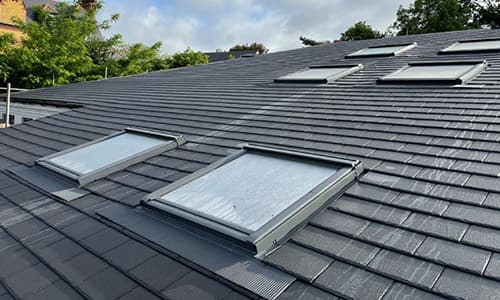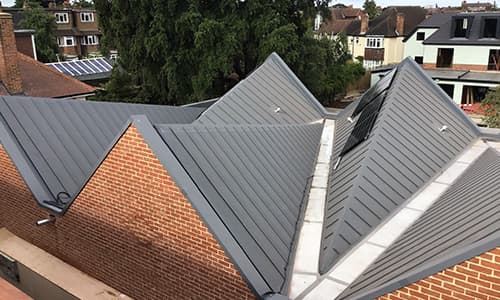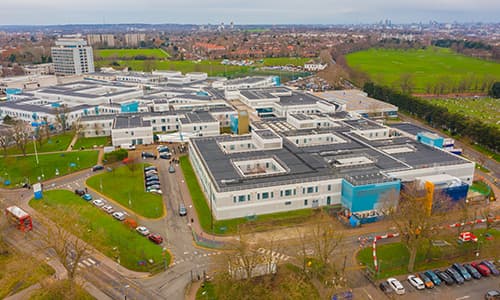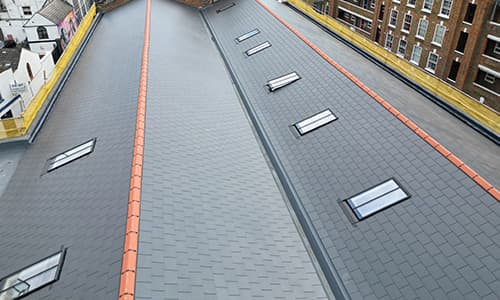
Stand on any hill in London and look across the rooftops. The clay tiles, Welsh slates, lead valleys, and chimney pots create a landscape that tells the story of the city's development over centuries. From the Georgian terraces of Camberwell to the Victorian villas of Blackheath, from the medieval churches of Greenwich to the Edwardian mansion blocks of Kensington, London's roofs are an integral part of its architectural heritage.
At Capital Roofing, heritage work is something we take seriously. Not because it is more profitable than other roofing work (it often is not), but because we believe that the skills, materials, and methods that have kept London's historic buildings weathertight for generations deserve to be preserved and passed on. This is why we invest heavily in our apprenticeship programme and why we insist on using authentic materials on heritage projects.
What Makes Heritage Roofing Different
Heritage roofing is not just about using old materials on old buildings. It is about understanding how those materials were originally used, why specific methods were adopted, and how the roof interacts with the rest of the building structure. A Victorian slate roof is part of a system that includes the timber structure, the ventilation arrangement, the leadwork details, and the rainwater disposal. Change one element without understanding the others, and you can create problems that did not exist before.
Take a simple example: replacing a natural slate roof with concrete tiles. The tiles are heavier than the slates, which puts additional load on the rafters and may require structural reinforcement. The tile profile is different, which changes the water run-off pattern and may require different gutter and downpipe sizes. The ventilation characteristics are different, which may require additional ventilation openings to prevent condensation in the loft space. And the visual appearance is completely different, which may breach conservation area regulations.
A heritage roofing contractor understands all of these interactions and specifies accordingly. The goal is to maintain the original design intent while ensuring that the new work meets current building standards.
Materials and Sourcing
For listed buildings and properties in conservation areas, the choice of roofing material is often prescribed or heavily influenced by the local authority conservation officer. In our experience across multiple London boroughs, the following expectations are typical:
Welsh slate is the preferred material for slate roofs on listed buildings and in most conservation areas in South East London. The blue-grey colour, the texture, and the size range of Welsh slate match the original installations on most 19th century buildings in the area. Spanish slate is sometimes accepted as an alternative, but the colour and texture are noticeably different.
Reclaimed slate is an option for repairs and partial re-roofing. We maintain contacts with demolition contractors and reclamation yards who supply reclaimed Welsh and Cornish slate. The quality is variable, and every slate must be inspected before use, but for patch repairs on listed buildings, reclaimed slate can provide an exact match to the existing covering.
Handmade clay tiles are specified for buildings where machine-made tiles would look out of place. Kent peg tiles, for example, have a characteristically irregular surface that cannot be replicated by factory production. Suppliers such as Keymer and Aldershaw produce handmade tiles for the heritage market, and we work with them regularly.
Sand-cast lead is the heritage standard for leadwork on the most sensitive buildings. It has a textured surface that is visually distinct from machine-milled lead and is considered more authentic for period restorations. We source sand-cast lead from specialist suppliers and our leadworkers are experienced in working with it.
The Skills Question
Heritage roofing requires skills that take years to develop and that cannot be learned from a manual. Dressing a slate to size with a slate knife, forming a lead valley with welted and bossed joints, bedding ridge tiles in lime mortar, fabricating a copper flashing to fit an irregular stone abutment: these are craft skills that require practice, patience, and a good eye.
This is one of the reasons we are so committed to our apprenticeship programme. We have been training apprentices since the earliest days of the company, and several of our former apprentices have gone on to win national and international awards, including representation at the NFRC World Championships. The skills they develop through four years of supervised training are exactly the skills needed for heritage roofing work.
It concerns us that the roofing industry as a whole is not training enough young people to replace the retiring generation of skilled tradespeople. If the pipeline of trained heritage roofers dries up, London's historic buildings will suffer. We do what we can by maintaining our own programme and encouraging other contractors to invest in training.
Working with Conservation Officers
Every London borough has conservation officers who review and approve works to listed buildings and properties in conservation areas. Our experience with these officers across Greenwich, Lewisham, Bromley, Southwark, Lambeth, Westminster, and Kensington is that they are knowledgeable, reasonable, and genuinely committed to protecting the built heritage.
The key to a smooth approval process is early engagement. We advise clients to contact the conservation officer before finalising a roofing specification, not after. This gives the officer the opportunity to provide guidance on acceptable materials and methods, and it avoids the cost and delay of having to redesign a scheme that has already been costed.
We are happy to attend pre-application meetings with conservation officers on behalf of our clients, bringing material samples and technical specifications to support the discussion.
The Value of Getting It Right
Heritage roofing costs more than standard roofing, there is no escaping that fact. Natural Welsh slate costs more than Spanish slate, which costs more than concrete tiles. Sand-cast lead costs more than machine-milled lead. Handmade tiles cost more than machine-made tiles. And the slower, more careful installation methods that heritage work demands add to the labour cost.
But the value is real. A properly executed heritage roof maintains the architectural character of the building, satisfies planning requirements, and uses materials that will last for generations. It also protects the property value; a listed building with an inappropriate modern roof covering will be worth less than one with the correct traditional materials.
For property owners in London who are responsible for heritage buildings, investing in proper heritage roofing is not a luxury. It is stewardship.
If you have a heritage roofing project in London, we would welcome the opportunity to discuss it. Contact our office in Blackheath to arrange a site visit.