In our experience, the most expensive roof repairs are the ones that could have been prevented. A slipped slate that lets in water for six months before anyone notices will cause more damage to the building interior than the slate itself would ever have cost to replace. A blocked gutter that overflows onto a timber fascia for two years will rot the fascia, the rafter feet, and potentially the wall plate, turning a 50 pound gutter clearance into a 5,000 pound repair.
The point is simple: regular observation and prompt attention to small problems will save you significant money over the life of your building. This article covers the warning signs that every building owner and property manager should know how to recognise.
Signs Visible from Ground Level
You do not need to climb onto the roof to spot many common problems. A walk around the building, looking up at the roof from ground level, can reveal:
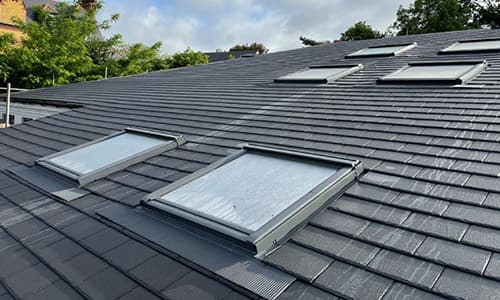
Slipped or missing tiles and slates. These are usually visible as gaps or irregularities in the roof covering, particularly after a storm. A single missing tile may not cause immediate internal damage if the underlay is intact, but it exposes the underlay to UV degradation and further wind damage. Left unaddressed, one missing tile becomes five becomes a section of exposed roof deck.
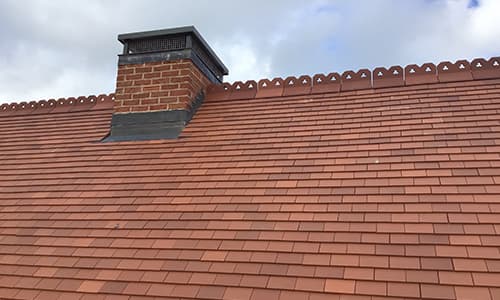
Damaged or missing ridge tiles. The ridge line (where two slopes meet at the top) is one of the most exposed parts of the roof. Mortar bedding cracks and fails over time, and strong winds can dislodge ridge tiles entirely. A displaced ridge tile is immediately visible from ground level as an irregularity along the top line of the roof.
Sagging or uneven roof planes. A roof slope that appears to dip, bow, or sag may indicate structural problems with the rafters or purlins. This is more common on older buildings where the original timbers may have deteriorated over decades. Any visible sagging should be investigated by a professional as soon as possible.
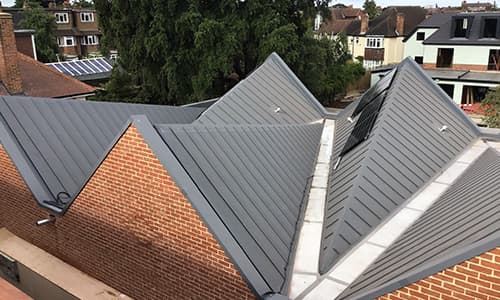
Damaged flashings. Flashings are the strips of lead, zinc, or mortar that seal the junctions between the roof and walls, chimneys, and other projections. Cracked mortar fillets, lifted lead flashings, and corroded zinc strips are all visible from the ground on most buildings. Failed flashings are one of the most common causes of roof leaks.
Blocked or overflowing gutters. Gutters that overflow during normal rainfall are either blocked with debris or inadequately sized. The overflow water cascades down the wall, saturates the brickwork, and can penetrate the building interior. In winter, saturated brickwork is also vulnerable to frost damage. Gutter clearance is one of the simplest and most cost-effective maintenance tasks on any building.
Vegetation growth. Moss on a pitched roof retains moisture against the tile or slate surface, accelerating deterioration. On flat roofs, vegetation growth (especially buddleia and other pioneer species) indicates moisture retention in the membrane or build-up, and the root systems can penetrate and damage waterproofing layers. Any vegetation growth on a roof should be removed promptly.
Signs Visible from Inside the Building
The interior of the building can also provide clues about roof problems:
Water stains on ceilings and walls. Brown or yellow stains on plaster ceilings and upper floor walls almost always indicate water ingress from the roof. The stain location does not necessarily correspond to the leak location on the roof, because water can travel along rafters, purlins, and ceiling joists before it drips through the plaster. But the stain tells you there is a problem that needs investigation.
Damp or musty smells in the loft. Condensation and water ingress both produce damp conditions in roof voids. A musty smell when you enter the loft suggests elevated moisture levels that could indicate a roofing problem, inadequate ventilation, or both.
Daylight visible through the roof. If you can see daylight through the roof covering from inside the loft, there is a gap that is also letting in rain and wind. This may be a slipped slate, a cracked tile, or a failed junction detail.
Timber deterioration. If the exposed roof timbers in the loft show signs of rot (soft, spongy, or crumbling wood), wet conditions, or fungal growth, the roof covering or the ventilation arrangement (or both) is not performing correctly. Timber rot, if left untreated, can compromise the structural integrity of the roof.
Seasonal Considerations for London Properties
London weather creates specific patterns of roof deterioration that experienced property managers learn to anticipate.
Autumn brings leaf fall, which blocks gutters and downpipes. A single autumn gutter clearance in October or November will prevent winter overflow problems on most buildings.
Winter storms are the peak period for wind damage to roof coverings. After any significant storm (winds above 50 mph), a visual check of the roof from ground level is worthwhile. Look for displaced tiles, damaged flashings, and debris on the roof surface.
Spring is the best time for a comprehensive roof inspection, because any damage from the winter can be identified and repaired before the next autumn and winter cycle. This is when we recommend scheduling your annual professional roof inspection.
Summer heat can cause thermal movement in flat roofing membranes, and prolonged dry periods can desiccate lime mortar pointing on ridges and verges. These are slower-acting processes but still worth monitoring.
When to Call a Professional
Some observations clearly require professional attention: structural sagging, significant water ingress, and widespread tile or slate loss all need a qualified roofing contractor. But even less dramatic signs (a few slipped slates, minor gutter overflow, small patches of moss) are worth addressing sooner rather than later.
At Capital Roofing, we offer free initial assessments for building owners and property managers in London and the South East. If you have spotted any of the warning signs described in this article, contact our Blackheath office and we will arrange a visit.