Roofing does not get the attention it deserves as a career choice. When young people and their parents think about skilled trades, they tend to think of plumbing, electrical work, or carpentry. Roofing rarely makes the list. But it should, because the roofing industry offers excellent career prospects, strong earnings, genuine variety in the work, and the satisfaction of mastering a craft that is in high demand and short supply.
At Capital Roofing, we have been training apprentices since the early years of the company. Several of our former apprentices have gone on to win national awards, compete at international level (including the NFRC World Championships), and build long, successful careers in the roofing industry. In 2002, we became the first roofing company to be recognised by Investor in People, reflecting our commitment to workforce development.
This article is written with input from current and former apprentices, and it aims to give an honest picture of what a roofing career involves.
What the Work Involves
Roofing is physical outdoor work. You will be on your feet, on a roof, in all weathers, carrying materials and using hand tools. You need to be reasonably fit, comfortable with heights, and willing to work outdoors in rain, wind, and cold as well as in summer sunshine.
The physical demands are real, but they are manageable. Modern health and safety practices, proper equipment, and careful working methods mean that the profession is far safer and less physically gruelling than it was a generation ago. Our consecutive NFRC Gold Safety Awards since 2004 reflect our approach to this.
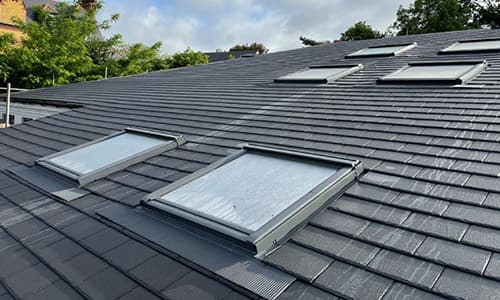
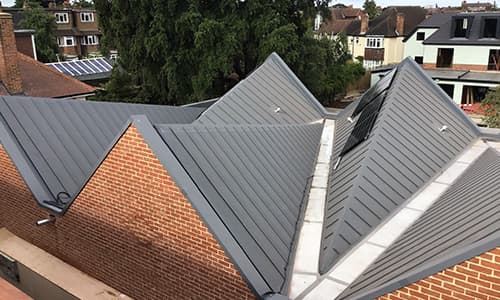
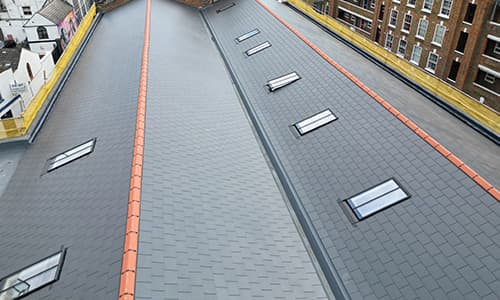
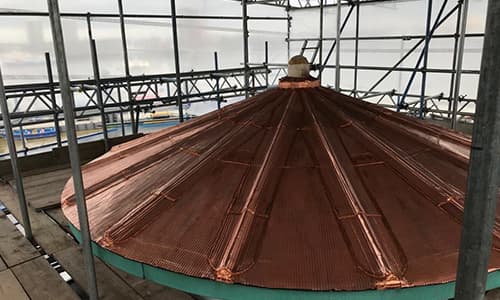
The variety of work is one of the things our apprentices consistently highlight as a positive. A roofer might spend Monday fitting slates on a Victorian terrace in Greenwich, Tuesday torch-applying bitumen membrane on a school in Bromley, Wednesday installing a single ply system on a commercial unit in Dartford, and Thursday forming lead flashings on a church in Blackheath. The materials, the techniques, and the buildings change constantly.
The Apprenticeship Programme
Our apprenticeship programme runs for four years and combines on-site practical training with college-based theory and assessment. Apprentices rotate through different types of roofing work (pitched, flat, heritage, metalwork) during their training, building a broad skill base before specialising.
First-year apprentices work alongside experienced tradespeople, learning basic techniques, site safety, and material handling. By the second year, they are carrying out supervised installation work. In the third and fourth years, they take on increasing responsibility and work toward their NVQ Level 2 and Level 3 qualifications.
We pay our apprentices from day one, and the pay increases each year as skills develop. By the end of the apprenticeship, a qualified roofer at Capital Roofing earns a competitive trade wage, with clear progression to senior roles, supervisor positions, and management for those who want to develop further.
College and Qualifications
Apprentices attend college one day per week (or in block release periods) to study the theoretical aspects of roofing: building construction, materials science, health and safety legislation, building regulations, and technical drawing. The qualifications gained (NVQ Level 2 and Level 3, plus a CSCS card) are nationally recognised and portable across the industry.
We supplement the college training with in-house technical sessions, manufacturer training courses, and attendance at industry events. Our apprentices regularly attend NFRC training days and have the opportunity to compete in regional and national skills competitions.
Career Progression
A qualified roofer has multiple career paths available:
Site-based progression: from improver to skilled operative, to leading hand, to site supervisor. A good site supervisor manages teams, coordinates with other trades, and takes responsibility for the quality and safety of the work.
Technical specialisation: some roofers develop particular expertise in one area, such as heritage leadwork, liquid waterproofing, or green roofs. Specialists command premium rates and are in constant demand.
Project management: experienced roofers who develop organisational and communication skills can move into project management roles, overseeing multiple jobs and managing client relationships.
Estimating and surveying: the combination of technical knowledge and practical experience makes former roofers excellent estimators and surveyors. Understanding what a job actually involves, from having done the work yourself, produces more accurate quotations and better project outcomes.
Business ownership: several of our former apprentices have gone on to start their own roofing businesses. The training they received here gave them the technical foundation, and the experience of working in a well-managed company gave them the business skills.
What Our Apprentices Say
We asked some of our current and former apprentices what they would say to someone considering a roofing career:
"I did not know roofing existed as a career until a mate told me about it. Now I cannot imagine doing anything else. Every day is different, you are outside, you can see what you have built at the end of the day. Office work would drive me mad."
"The money is good and it gets better the more skilled you become. By your mid-twenties you can be earning more than most people with university degrees, and you have no student debt."
"The competitions are brilliant. I entered the NFRC regional competition in my third year and it was the most nerve-wracking thing I have ever done. But I learned more in that one day than in a month of normal work."
"People do not realise how technical roofing is. It is not just putting tiles on a roof. You need to understand building physics, thermal calculations, structural loading, weatherproofing details. There is always something new to learn."
How to Apply
If you are interested in a roofing apprenticeship at Capital Roofing, or if you are a parent or teacher wanting to find out more, contact our office in Blackheath. We recruit apprentices annually, typically starting in September. We look for enthusiasm, reliability, physical fitness, and a willingness to learn. No previous experience is required.
The roofing industry needs skilled people. The average age of a qualified roofer in the UK is increasing, and the number of new entrants is not keeping pace with retirements. For young people who are willing to work hard and learn a trade, this represents a genuine opportunity.